
The Southern Climate Impacts Planning Program (SCIPP) has been awarded $1.1M for another year of funding from the National Oceanic and Atmospheric Administration (NOAA) to advance preparedness and resilience across state and local scales in the south central U.S. The multi-institutional, multi-disciplinary team successfully re-competed for the NOAA Regional Integrated Sciences and Assessments (RISA) program funding. The team is led by the University of Oklahoma (OU) and includes institutional partners at Louisiana State University Health Sciences Center, Texas Sea Grant at Texas A&M University, and Adaptation International, a small private company based in Austin, Texas. Faculty from four different departments at OU are involved in the grant, including the Oklahoma Climatological Survey; the Division of Construction Sciences; the Division of Planning, Landscape Architecture, and Design; and the Department of Economics.
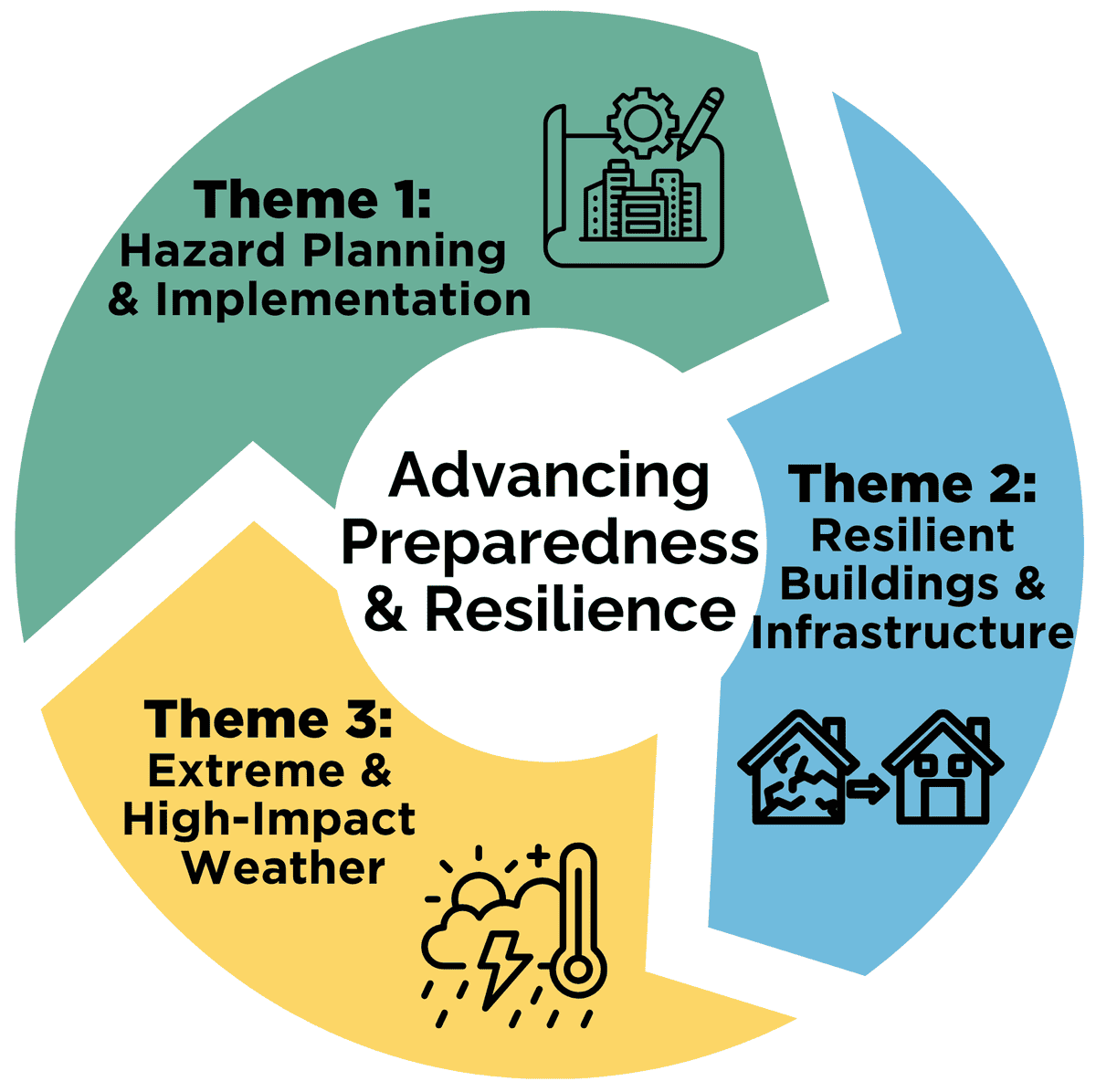
The new funding will support 10 projects that align with three research themes: hazard planning and implementation, resilient buildings and infrastructure, and extreme and high-impact weather. Specific weather hazards of focus include hail, tornadoes, temperature extremes, and flooding. SCIPP researchers and staff will engage with stakeholder partners to ensure that the research results and resources that are produced help make progress toward reducing risk and increasing their resilience. Some of the specific stakeholders include the Oklahoma Electric Cooperative, National Hazard Mitigation Association, City of Shreveport (Louisiana), LCMC Health System (Louisiana), Oklahoma Insurance Department, and the North Central Texas Council of Governments.
SCIPP’s past research catalog includes a range of studies utilizing physical and social science methods that were designed to directly meet stakeholder needs and assist with decision-making. In recent years, the team made physical science advancements in hurricane and tropical cyclone science, and improved the understanding of metrics for heat-related illness across Louisiana and the spatiotemporal variability of winter warming and declining freeze days across the country. Social science research provided greater insight into the barriers to, and resources that enable, hazard mitigation planning and implementation, and assessed how more local discretionary budgeting capacity could benefit disaster risk reduction investments in Shreveport, Louisiana.
In addition to formal research projects, SCIPP researchers and engagement specialists contributed to heat awareness, preparedness, and action in Oklahoma City, Oklahoma; educated members of the Inland Marine Underwriters Association about tropical cyclone science and trends; convened 175 professionals across all levels of government, private and non-profit sectors, and academia to share knowledge, tools, and strategies at the 2026 South Central Climate Resilience Forum; and improved data access and awareness for planners and emergency managers across the region through its Simple Planning Tool for Climate Hazards.
SCIPP has been helping communities and organizations in the south central U.S. assess and address their weather and climate risks and impacts since 2008. The team will continue its long-standing work and expand research and engagement through new research topics.