Author(s): Vincent Brown, Derek Thompson, Buren DeFee II, Michael Osland, Barry Keim
Year: 2026
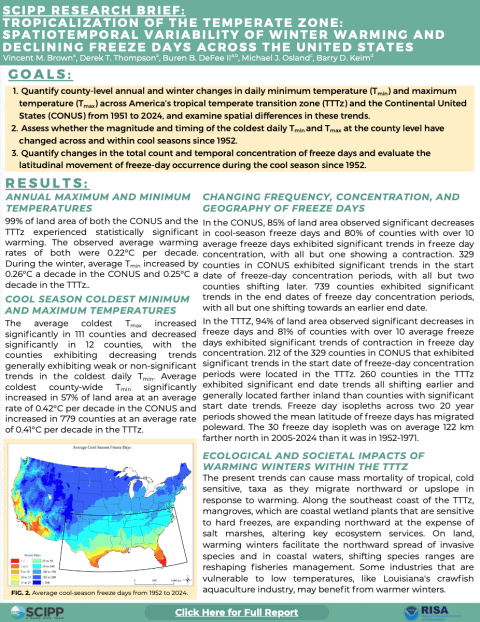
This document summarizes the findings of SCIPP’s “Tropicalization of the Temperate Zone: Spatiotemporal Variability of Winter Warming and Declining Freeze Days Across the United States.” This paper investigates temperature variables through both warm and cold seasons and explores latitude changes of freeze days. The Research Brief highlights the paper’s main climatological points and their importance as it relates to the study region’s ecosystem.
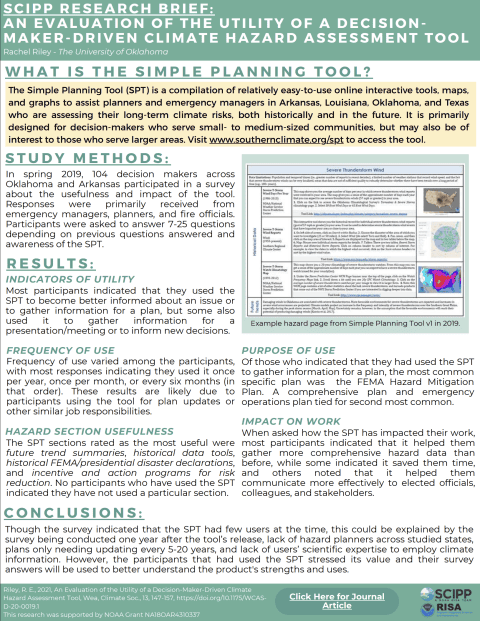
In spring 2019, 104 decision makers across Oklahoma and Arkansas participated in a survey about the usefulness and impact of SCIPP’s Simple Planning Tool. Responses were primarily received from emergency managers, planners, and fire officials. This document summarizes the findings of this survey and includes highlights from its resulting paper.
This report assesses climate adaptation planning efforts in Shreveport, Louisiana, discusses how community members experience challenges associated with extreme weather variability, and describes how those impacts are considered in Shreveport’s planning efforts. Recommendations for improved planning are also provided. The work presented in this report is part of a larger study investigating climate adaptation in low-capacity cities throughout the region: Tulsa, Oklahoma, Fayetteville, Arkansas, and Shreveport, Louisiana.
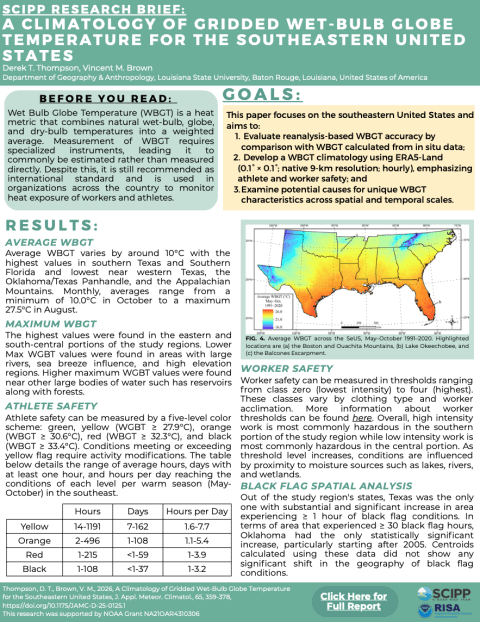
This paper develops a regional climatology of wet-bulb globe temperature (WBGT), a heat stress index that combines air temperature, humidity, wind speed, and solar radiation to represent environmental heat exposure. Thompson and Brown used athlete and worker safety thresholds to identify where WBGT is hazardous for individuals most at risk for heat-related health impacts.
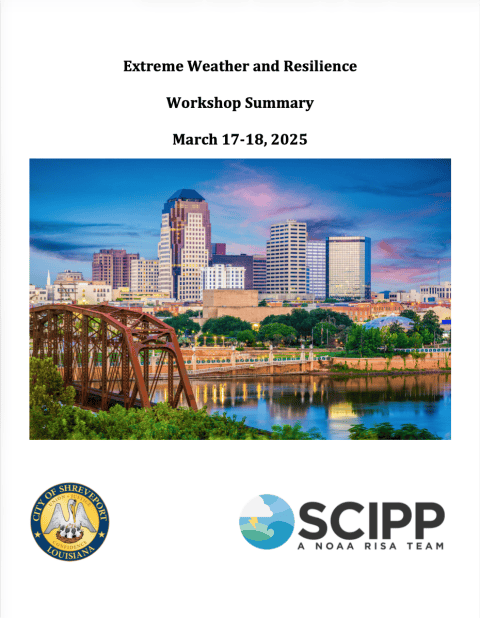
To examine opportunities to build resilience, An Extreme Weather and Resilience Workshop was held in the City of Shreveport, Louisiana in March 2025. Participants from city departments and partners collaborated with staff from the Southern Climate Impacts Planning Program (SCIPP) to examine the greatest weather-related challenges the city faces. Three areas were highlighted: High winds and storms; heat and cold; and intense rainfall. This report highlights the discussion and recommendations related to these three areas, along with general community preparedness.
Author(s): Mark Shafer, Trey Bell, Darrian Bertrand, Vincent Brown, Derek Thompson
Year: 2026
The goal of this report is to provide a concise summary of the climate and extreme weather events that affect the City of Shreveport. This information could be used to help inform planning and preparedness for extreme weather events now and in the future.
Author(s): Caylah Cruickshank, Ioana Cionea, Anna Wanless
Year: 2025
This report provides a summary of SCIPP’s 2025 Summer Internship Program’s participants, procedures, early outcomes, and recommendations. It highlights data collected from both the interns and the host organizations.
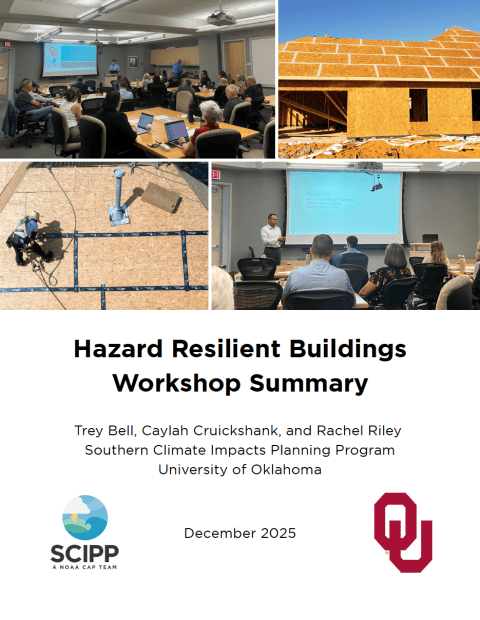
This report highlights numerous recommendations from members of the home builder, insurance, and real estate industries to improve the resilience of homes to severe weather hazards commonly seen in central Oklahoma.